Magnus Chair
Design Story
Heading in the opposite direction
Magnus emerged as a natural continuation of my collaboration with the brand, following the very positive reception of our previous chair—Dante. While Dante is defined by a more linear, architectural form—with flat surfaces paired with tapered, round legs—Magnus was born out of the need to go in the opposite direction.

Luigi Cittadini
I wanted to create a chair that was softer, more fluid, and visually calmer, while also simplifying the manufacturing process.

The project began with a very pragmatic need: the company was looking for a new upholstered chair that could function as a standalone design while still remaining consistent with our shared design language. My response was to work with gentler curves and a more uniform silhouette, without any unnecessary formal flourishes.
Soft to the eye, soft to the touch
The design is based on a simple X-shaped base, which allows for direct and efficient assembly of the seat and backrest. This solution ensures that the chair remains visually light, yet stable and easy to assemble.
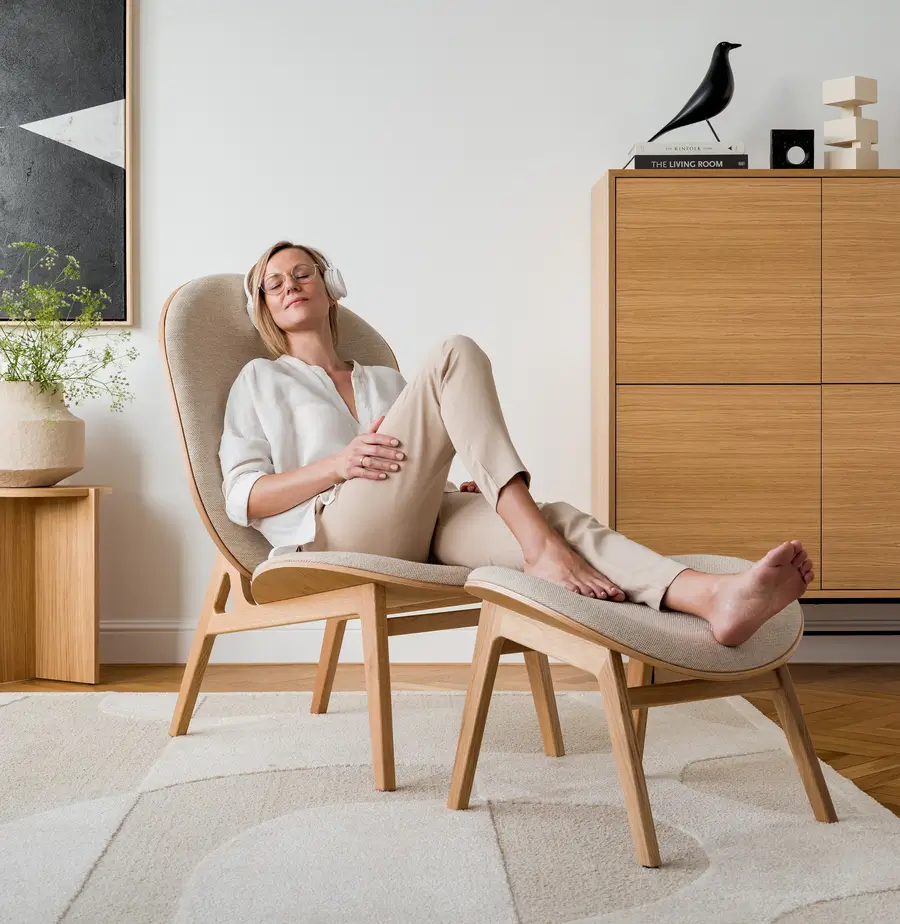
The lines of the Magnus chair are intentionally subtle. The seat combines a plywood base with a soft cushion, while the backrest is fully upholstered, creating a comfortable, continuous surface.


One of the key details is the alignment between the rear legs and the slope of the backrest’s side edges: they follow nearly the same trajectory, creating a clean, unbroken line visible from both the front and the back. This gives the chair a sense of cohesion and understated elegance, without the need for dramatic curves or complex forms.


Magnus is not intended to be a chair that stands out or is overtly iconic. It is a design created to blend naturally into various interiors—striking a balance between comfort, simplicity, and a gentle character.
Accessible design
For me, it represents a shift toward a more relaxed and accessible aesthetic—one that is still precise and controlled, but with a gentler presence than in our previous collaboration.


 There are no items in your cart.